Reviewed · ALBAICíN & SACROMONTE TOURS
Granada Citycenter&Albayzin
Granada is interesting because the city tells its story in layers. You start in the formal core, then wind into the winding, hillside streets of the Albayzín, and you end at a viewpoint where the Alhambra finally feels close.
I like two things right away. First, this is a small-group walk capped at 12 people, so you get time for questions. Second, you travel with a headset when the group is larger, which helps you keep up with the guide’s explanations instead of playing catch-up.
The main consideration is physical. This is a 2-hour on-foot tour with cobblestones and some uphill walking to the viewpoint, and it is not suitable for wheelchair users or baby strollers.
Key Things I’d Highlight Before You Go
- Small group, maximum 12: easier pace and more chances to ask questions.
- Headset included: from groups of 6 people so you can hear every stop.
- Official local guide focus: Granadian culture, not just dates and photos.
- UNESCO Albayzín streets: narrow lanes and hillside views that change every few steps.
- Top sights in one loop: Cathedral, Royal Chapel, Madraza, and the viewpoint finale.
Why This Granada Tour Feels Like the City, Not a Checklist
If you only see the Alhambra, you miss the “daily Granada” that still shapes the city. This tour is built for people who want the historic center and the Albayzín neighborhood, side by side, so the streets make more sense.
The best part is how the route moves through different styles of Granada life. You get formal architecture at the Cathedral and Royal Chapel, then you shift into marketplaces and craft traditions around the old souk area. From there, the path climbs into the Albayzín, where the city feels older than your watch.
One practical note: tickets to individual monuments are not included. That does not make the tour less valuable, but it does mean you may want to budget a little extra if you want to enter everything fully.
More of the Albaicin and Sacromonte on foot:
- Granada: Albaicín and Sacromonte Guided Sunset Walking Tour
★ 4.9 · 2,962 reviews - Sacromonte: Flamenco Show at Cuevas Los Tarantos Tickets
★ 4.5 · 2,051 reviews - Granada: Flamenco Show in Albaycin – Jardines de Zoraya
★ 4.7 · 1,234 reviews
Plaza Isabel la Católica, the Best Way to Start With Direction
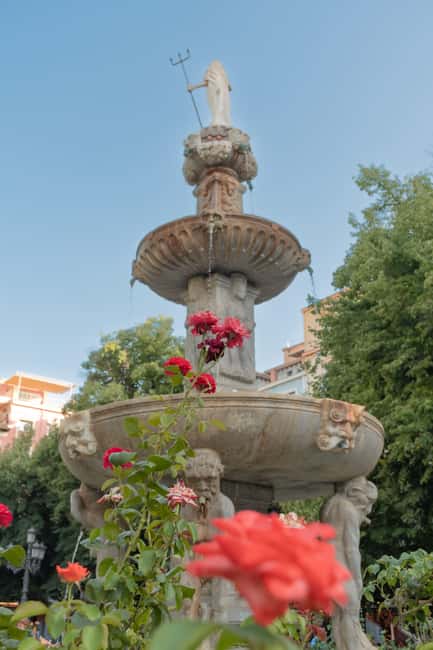
The tour begins at Plaza Isabel la Católica, at the statue, and you meet next to it by looking for a light blue umbrella. I like this kind of meeting point because it is simple: one plaza, one landmark, no guesswork about where the group gathers.
From the start, the guide sets expectations for how Granada is organized. You are not just walking from one building to another. You are learning how the city’s spaces connect, from main monuments to smaller preserved corners that people often walk past.
The fact that this is a 2-hour tour matters. It is long enough to feel like you covered real ground, but short enough that you can still explore on your own after. If you are trying to plan a first or second day in town, this is a smart anchor activity.
Corral del Carbón, the Nasrid Relic You Can Actually See

The first major stop is the Corral del Carbón. The guide brings it to life by explaining what it was and why it is rare. It is described as the only preserved alhóndiga from the Nasrid period in Spain.
That detail makes the building more than a pretty exterior. An alhóndiga was a kind of public storehouse or inn for goods and merchants. So when you stand there, you are seeing a practical piece of how Granada worked, not just how it looked.
Because monument tickets are not included, you might find this is one of those stops where entry could be optional depending on what you want. Still, even if you do not go deep inside, the explanation helps you recognize why this site matters.
Alcaicería and Plaza Bib-Rambla, Where Craft Traditions Still Matter
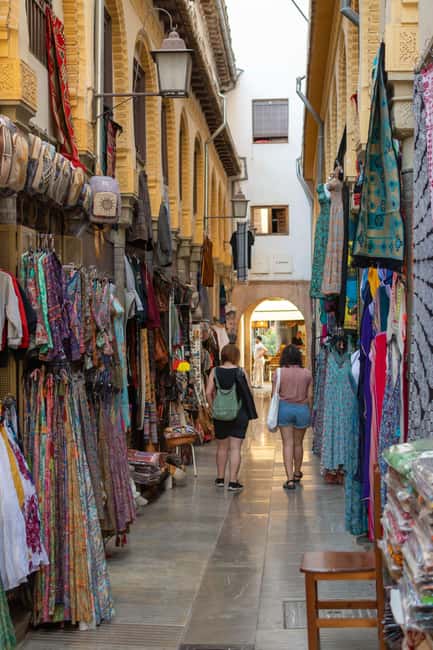
Next comes the Alcaicería, described as an old souk. In plain terms, it is a place where trade and luxury crafts once concentrated. The guide’s focus here is the cultural link between Granada and North African market traditions, which is a neat way to understand how styles moved.
You will also hear about traditional luxury crafts from Granada. The highlights include inlay work and fajalauza (the distinctive ceramic craft associated with Granada). If you care about what people make, not just what they built centuries ago, this stop is a strong reason to book.
Then you transition to Plaza Bib-Rambla, one of the big public squares with plenty of stories attached to it. The tour also points you toward the classic snack-food angle in this area, the kind of place where people come for chocolate and churros. Even if you do not stop for sweets on the walk, you will know where to aim later.
Two practical tips for this segment:
- Wear shoes with grip. You will be on historic-street surfaces.
- Keep water handy. You do not need a long hike, but you do need to stay comfortable.
Same city, a completely different kind of day:
- Granada: Alhambra & Nasrid Palaces Tour with Tickets
★ 4.7 · 19,801 reviews - Granada: Alhambra & Generalife Fast-Track Guided Tour
★ 4.7 · 8,313 reviews - Granada: Alhambra & Gardens Tour w/Nasrid Palaces Option
★ 4.5 · 6,437 reviews - Granada: Alhambra Entry Ticket with Audio Guide
★ 4.1 · 5,950 reviews
Granada Cathedral and the Royal Chapel, Two Different Styles in One Stop Chain
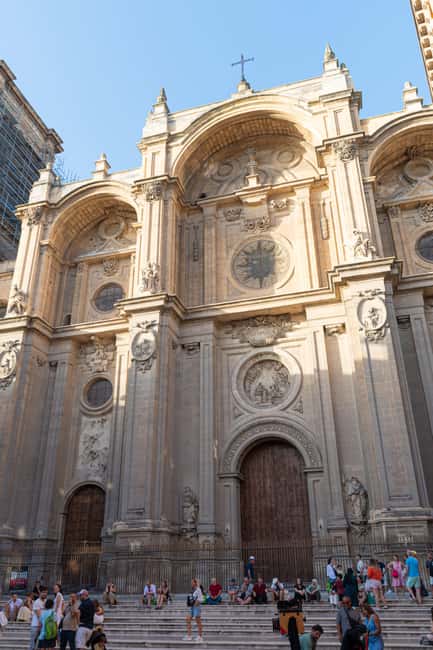
The tour then hits the heavy hitters: Granada Cathedral and the Royal Chapel. What I like about this combination is that you learn how Granada’s identity shifted over time while still staying in one compact area.
For the Cathedral, the guide explains that it is made up of three architectural styles. That matters because you can literally see change happening on the same walls. You are not reading about it later in a textbook. You are looking at it right there.
The guide also points out medieval graffiti on the Cathedral walls. That is one of those details that instantly makes a monument feel human. People left marks, not just tourists now. It is a reminder that this was a lived-in space long before any guidebook existed.
Right in front of the Madraza, you reach the Royal Chapel of Granada, described as the mausoleum of the Catholic Monarchs. This is one of those stops where your respect level goes up, because it is a strong visual statement of power and belief.
If you are the type who likes your sights explained in context, the pacing here works well. You get meaning, then you get to look.
La Madraza and the Quiet Power of “In-Between” Buildings
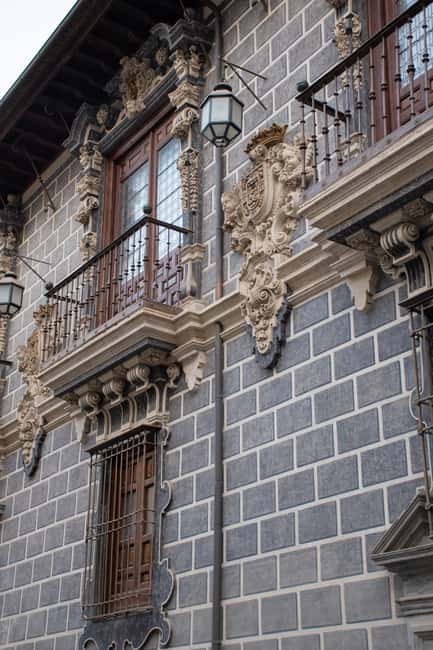
After the Cathedral and Royal Chapel, the tour stops at La Madraza. The key idea is that it sits near major religious sites, but it has its own role. The Madraza context helps you understand Granada as a place where learning and religion shaped the city’s rhythm.
This is also where I like the tour style: the guide helps you see connections, not just isolated points of interest. You start to notice how buildings relate to each other spatially, which makes later self-guided exploring easier.
One more practical note: you might not “feel” like you learned something on every second, but the order matters. Placing Madraza after the Royal Chapel makes the religious-and-educational theme click.
Carrera del Darro and the Albayzín Turn, Where the City Starts to Climb
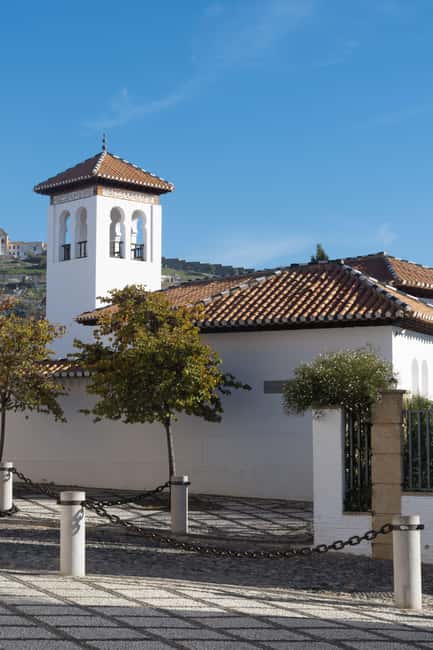
Once you pass beyond Gran Vía, the tour reaches the Albayzín. This neighborhood is UNESCO-listed, and you can feel why quickly. The streets are narrow, steep, and winding, so you stop thinking in straight lines and start thinking like a pedestrian in a maze.
You walk along Carrera del Darro, one of those classic Granada corridors with views and atmosphere. The guide talks about the Bañuelo or the Archaeological Museum area. Even if you are not stopping at every single building, the way the guide frames these sites helps you understand what you are looking at and why it is placed where it is.
Then comes the part that makes this tour feel worth it: the climb toward the end. A recent guide highlight I like from past experiences is that this tour can be a bit tiring on cobblestones and with the uphill movement. That is normal here. If you are fit and comfortable walking, you will enjoy it. If you are not, the value goes down because you spend energy just getting to the next corner.
Archaeological Museum, Aljibe de Trillo, and the Stuff People Skip
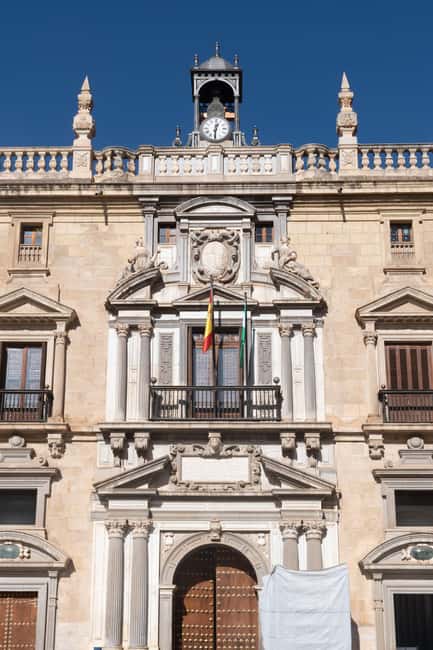
The route includes a stop near the Archaeological Museum of Granada and also the Aljibe de Trillo. These are the kind of places many visitors rush through or ignore because they are not the postcard headline.
That is exactly why they help your mental map. Granada is not just palaces. It is water systems, everyday learning, and the way people lived around infrastructure. When the guide explains these elements, the city feels more understandable, not just beautiful.
Because tickets are not included, you may need to decide on the day how much you want to go inside. The tour still gives you value if you focus on walking, listening, and soaking up what you can see from the street level.
San Nicolás Viewpoint, Your Payoff for Staying With the Climb
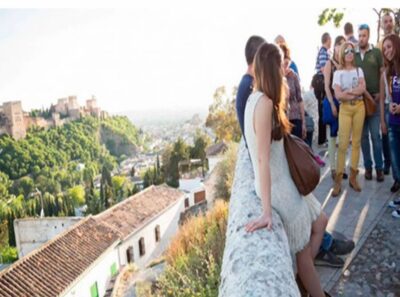
The tour finishes at Mirador de San Nicolás, which is the viewpoint finale. This is where the Albayzín payoff kicks in. You are on higher ground, so the city opens up and the Alhambra becomes part of the view instead of the distant goal.
Even if you already know Alhambra is there, the viewpoint makes it feel real. The guide also helps you interpret what you are seeing, which makes the photo stop more than just standing and shooting.
If you want maximum value here:
- Go slow for the final approach. Let your body catch up before you arrive.
- Take a moment to look around before focusing on the camera.
- Bring water, even on a short walk, because viewpoints can take longer than you expect.
Price and Value for a $17, Two-Hour Small-Group Walk
At about $17 per person for roughly 2 hours, the pricing makes sense if you value direction and context. You are paying for an official local guide, a route that prioritizes key Granada spaces, and a format that keeps the group small.
It is also good value because you are not wasting time figuring out where to start, where to turn, or which monuments are worth extra attention. The guide’s explanations, plus the headset support from larger groups, prevent the usual problem of walking through a historic center while missing half the details.
The only budget caution is this: monument tickets are not included. So if you plan to enter multiple sites, you may want to add that cost yourself. The good news is that you can still get the meaning of many stops from the street view plus the guide’s explanation, but entry is what turns it into a full “inside the building” day.
No transportation or hotel pickup is included either, so build in the time to reach Plaza Isabel la Católica. That is easy, but it is part of the deal.
Who This Tour Suits Best, and Who Should Skip It
This is ideal if you:
- Want a first-time Granada introduction that includes the Albayzín, not just the Alhambra zone.
- Like walking tours where the guide’s cultural context matters.
- Prefer a small group with a quick chance to ask questions.
It is less ideal if:
- You need a wheelchair-friendly route. This tour is not suitable for wheelchair users.
- You rely on baby strollers, since strollers are not allowed.
- You have trouble with cobblestones or climbing to viewpoints. The route includes that uphill segment toward San Nicolás.
In other words, if you can handle a hilly neighborhood walk, you are set. If stairs and uneven streets are a problem, you might look for a different format.
Should You Book Granada Citycenter and Albayzín?
I think you should book this tour if you want a concentrated, guided look at Granada’s historic core and the Albayzín in one go, with headsets and a route that actually makes connections between monuments, markets, and viewpoints.
You should skip it if you want a relaxed sit-down style outing, or if you cannot manage cobblestones and the climb. In Granada, that hillside walking is part of the experience, not optional.
If you do book, plan for comfortable shoes, bring water, and treat the San Nicolás finish as your reward. This is the kind of walk where, after two hours, you understand the city streets better and you can explore longer on your own without getting lost.
FAQ
Where is the meeting point?
The meeting point is Plaza Isabel la Católica, and you should look for a light blue umbrella next to the statue.
How long is the tour?
The tour lasts 2 hours.
What does it cost?
The price is listed as $17 per person.
What’s the group size?
The tour is a small group with a maximum of 12 people.
Is a headset provided?
Headsets are included for groups of 6 people (so you can hear the guide clearly).
What language is the guide available in?
The live tour guide is available in English and Spanish.
Are entrance tickets to monuments included?
No. Tickets to the monuments are not included.
What should I bring?
Bring comfortable shoes and water.
Is it suitable for wheelchair users?
No. The tour is not suitable for wheelchair users.
Are baby strollers allowed?
No. Baby strollers are not allowed.
Latest to land in Granada
- Granada: Authentic and intimate Flamenco Show with Snacks★ 4.2 · 9 reviews
- Guided tour Granada Unexplained★ 5.0 · 5 reviews
- From Granada: Day Trip to Trevélez with Ham Factory★ 4.6 · 12 reviews
- Albaicín and Sacromonte Sunset tour + Flamenco show★ 5.0 · 11 reviews
- Guided tour Conspiracy in the Albaicín★ 5.0 · 6 reviews
- Water paths. Private adventure and history tour★ 5.0 · 6 reviews
- Albaicin guided tour with dogs★ 5.0 · 6 reviews
- Vía Ferrata in Granada – Moclín★ 5.0 · 4 reviews
Albaicín & Sacromonte Tours, side by side.
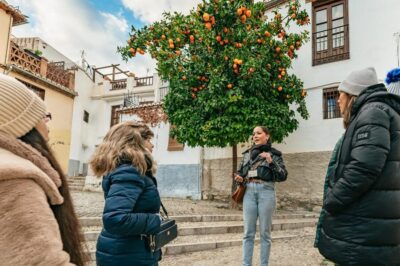
Albaicín and Sacromonte Guided Sunset Walking Tour
Read our review →

Flamenco Show in Albaycin – Jardines de Zoraya
Read our review →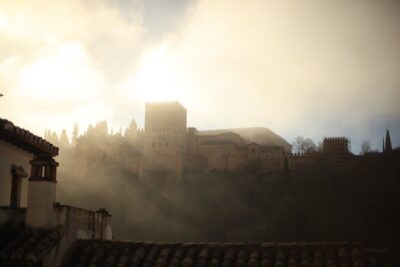
Albaicin & Sacramonte Electric Bike Tour in Granada
Read our review →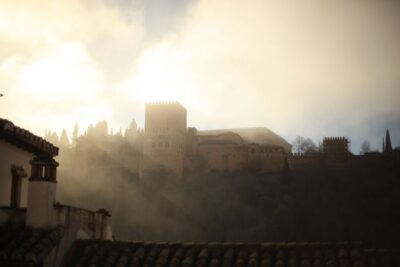

This tour also appears in