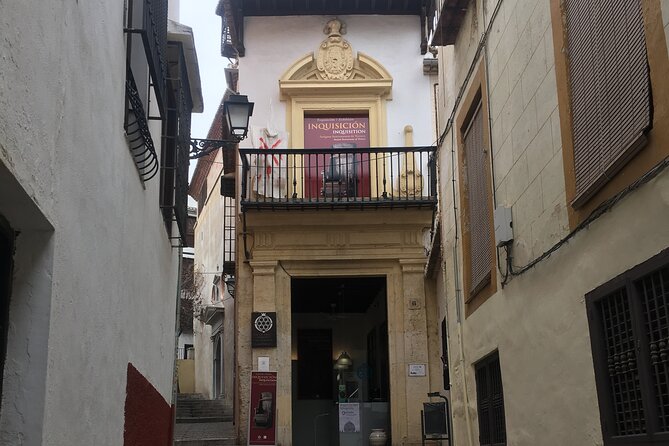
Reviewed · GRANADA
Exhibition Inquisition Instruments of Torture in Granada
The most interesting thing about this stop is the setting. You go inside a restored 16th-century palace in the lower Albaicín, then end with a view over the Alhambra.
I love that the exhibition is focused and quick, so it feels like a sharp Granada detour, not a time sink. I also like the value: around $9 gets you a permanent, curated look at the machinery used by inquisitorial courts.
The main drawback is that it is brief. If you want deep background on the Inquisition, you might wish there were more explanation than what you get in the rooms.
Quick highlights for your visit
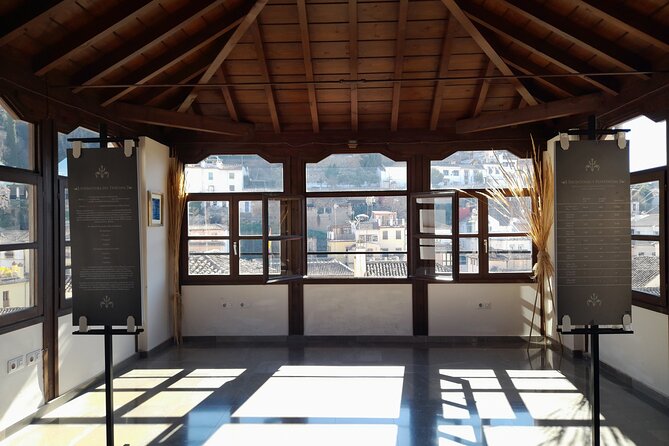
- Palacio de los Olvidados setting: a restored 16th-century palace near the Darro River
- A short exhibition experience that can fit into almost any Granada day
- Torture and capital punishment artifacts, presented as a historical selection
- Ecclesiastical vs civil court focus, with the Spanish courts described as more sparing
- Garrucha, guitar, rack called out as among the most used instruments
- End viewpoint over the Alhambra, so you leave with a payoff beyond the exhibits
Palacio de los Olvidados: the setting you walk into
This is not a museum built from scratch. The exhibition happens in the Palacio de los Olvidados on the Santa Inés slope, in Granada’s lower Albaicín, close to the Darro River and at the foot of the Alhambra hill.
I like this kind of location because it changes the mood. You are moving through streets where time feels slower, with the mix of Arab, Sephardic, and Christian Granada around you, and then you step into a 16th-century space that has been fully restored.
If you are already planning to roam the Albaicín, this is a good add-on. It keeps you in the historic neighborhood instead of forcing you into a far-off detour.
A few more Granada days to weigh up
- Granada: Albaicín, Sacromonte & Museum of Caves Walking Tour
★ 4.9 · 244 reviews - Sacromonte Caves Museum Admission Ticket
★ 4.6 · 502 reviews
Inside the exhibition: what you’ll see and how it’s presented
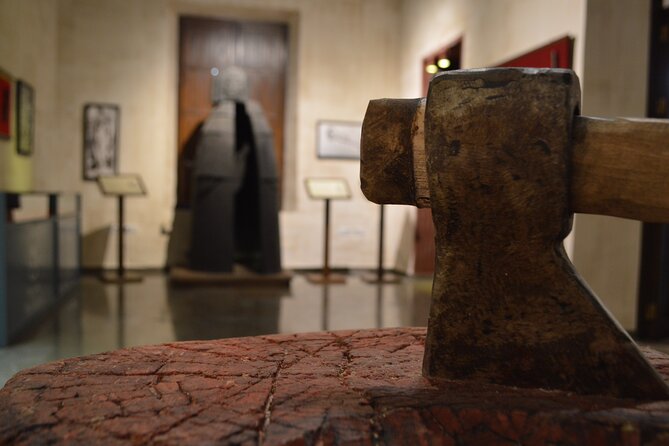
The permanent exhibition is called Inquisition, instruments of torture. It centers on a selection of instruments tied to inquisitorial courts across Europe, including both ecclesiastical and civil systems.
The show is essentially the objects first, context second. That is part of why it is memorable: you get a direct, unsettling look at the tools that courts used for intimidation, punishment, or control.
Based on what you’ll encounter, expect to spend most of your time reading the labels and looking carefully at the display items, not wandering through long multimedia stations. The experience is designed to be completed in a single visit, and it is very doable even if your time in Granada is tight.
Ecclesiastical courts vs civil courts: the context you do get
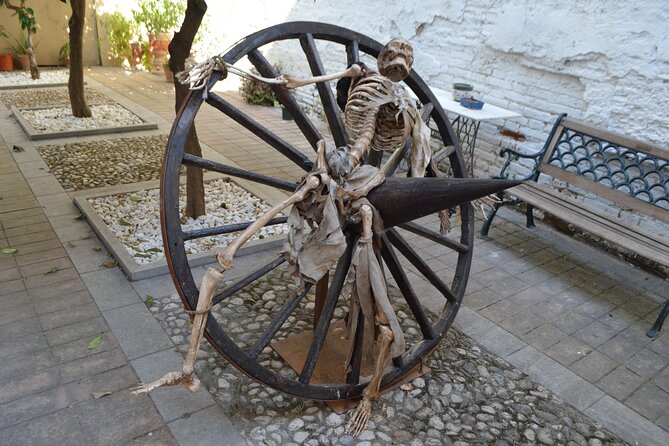
One of the clearer parts of the exhibition is how it frames who used what. Spanish ecclesiastical courts, according to the exhibit information, were described as more sparing in their use of instruments.
When it comes to Spanish ecclesiastical use, the most used instruments highlighted include the garrucha and the guitar and the rack. That detail helps you understand the exhibition’s sorting logic, rather than treating every device as the same category of practice.
Then the exhibition shifts tone toward civil courts, in Spain and elsewhere in Europe. This is where the display leans into machines used against groups that different societies considered dangerous for coexistence. The object selection makes that contrast feel real, even if you are not getting a long lecture.
A quick consideration: if you came hoping for a full historical walk-through of how the Inquisition evolved and why it worked, the exhibition may feel like it runs out of room. It focuses on instruments and how courts used them, so the history is present, but not expansive.
The garrucha, guitar, and rack labels: why those names matter
You do not just see random torture devices. The exhibition gives you specific callouts, including the garrucha, the guitar, and the rack for the Spanish ecclesiastical context.
I find that helpful for two reasons. First, those named instruments give you anchors, so you can remember what you saw. Second, the fact that the exhibit distinguishes between ecclesiastical and civil courts makes the categories feel intentional rather than just sensational.
Still, keep your expectations grounded. This is an exhibition of instruments and capital punishment tools. You will likely leave with a stronger sense of the machinery than a fully developed explanation of the politics, law, and theology behind every courtroom decision.
If you are sensitive to dark subject matter, plan your pace accordingly. You can always slow down at the labels and move quickly through areas that feel too intense for your comfort.
Same city, a completely different kind of day:
- Granada: Alhambra & Nasrid Palaces Tour with Tickets
★ 4.7 · 19,801 reviews - Granada: Alhambra & Generalife Fast-Track Guided Tour
★ 4.7 · 8,313 reviews - Granada: Alhambra & Gardens Tour w/Nasrid Palaces Option
★ 4.5 · 6,437 reviews - Granada: Alhambra Entry Ticket with Audio Guide
★ 4.1 · 5,950 reviews
How long it takes, and why that can be a benefit
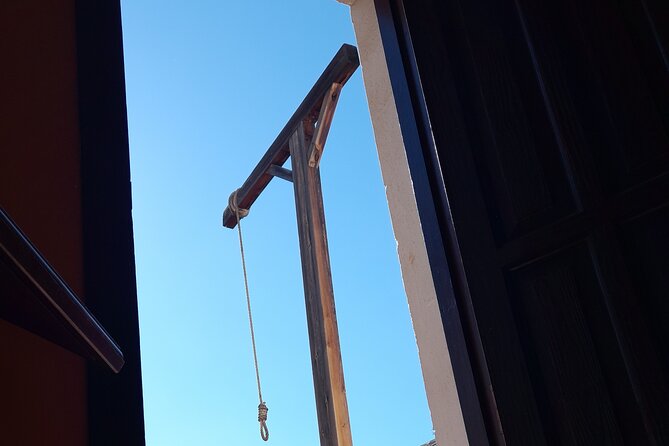
This visit is short by design, with a duration listed as about 1 to 40 minutes. In practice, you should plan for a faster visit if you like to skim. If you are the type who reads every label, you can still finish without eating up a big chunk of your day.
For $9, that matters. Granada is full of things worth doing, and a compact museum stop means you can keep your schedule flexible. You can slot it between Albaicín viewpoints, a walk along the Darro, or an Alhambra-area evening.
One more practical point: a brief exhibition also means less decision fatigue. You can do it on impulse when you are already nearby, especially since the palace is in a central historic area.
The viewpoint over the Alhambra: your payoff at the end
The visit ends with a fantastic viewpoint overlooking the Alhambra. That final moment is a big part of the value because it gives you something visual and uplifting right after the darker themes.
I like closing with a view for two reasons. It helps your mind reset. It also lets you turn the day into a story: palace walls and inquisitorial instruments on one side, then the Alhambra skyline waiting outside.
If you are going during golden hour, even better. You might not control the exact lighting, but the basic idea is solid: don’t hurry out as soon as you finish the exhibition rooms.
Location in the Albaicín: where you fit this stop
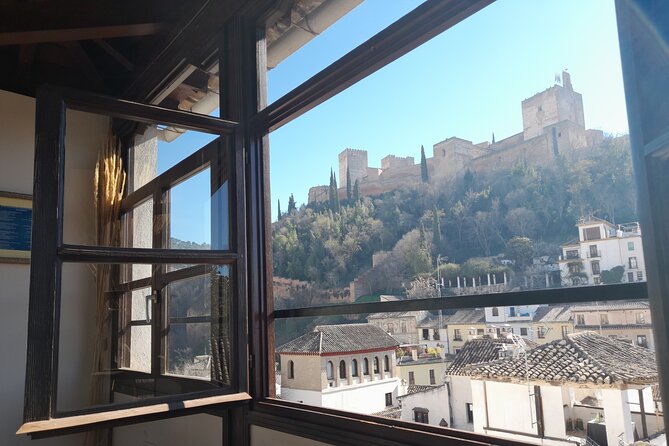
The Palacio de los Olvidados sits in the lower Albaicín on the Santa Inés slope. This is a neighborhood people come to for atmosphere: narrow streets, steep grades, and that layered Granada feel.
This stop works best when you are already doing an Albaicín loop. If you are planning to walk from viewpoint to viewpoint, you can often treat this like one more angle on the Alhambra.
It is also convenient for transit because it is listed as near public transportation. That matters if you are mixing neighborhoods or trying to avoid long uphill walks after a busy day.
Price and value: what $9 buys you in Granada
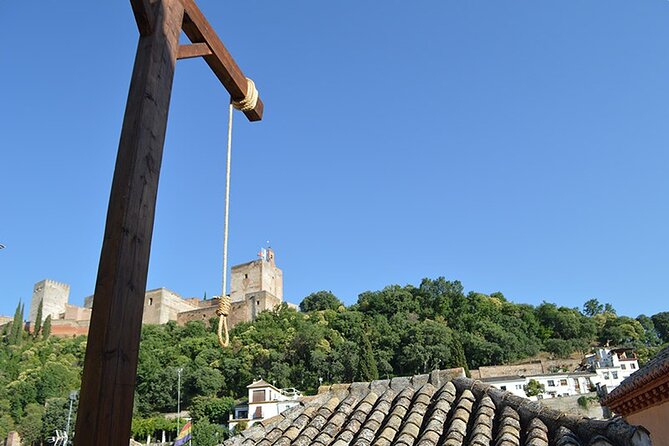
The price is listed at $9, with all fees and taxes included. For that money, you are buying a permanent exhibition experience in a restored palace, plus the Alhambra viewpoint at the end.
Is it a bargain? Yes, because you are not paying for a half-day attraction. You are paying for a compact visit with a clear end point.
What you should know is what you are not buying. You are not paying for a long, fully academic multi-hour history lesson. You are paying for a focused look at instruments tied to inquisitorial courts and capital punishment, delivered in a small-format setting.
So I treat it like a smart “add-on with impact.” If you like historic exhibits that stay focused on a specific theme, you will probably feel satisfied. If you want a big, narrative-driven museum experience, you may want to pair it with another Granada history stop.
Who this experience suits best
This is a good fit if you want:
- A short, in-and-out cultural stop in Granada
- A permanent exhibition in a 16th-century restored building
- An ending viewpoint over the Alhambra
- A low-cost way to add something unusual to your day
It may not be ideal if:
- You need extensive background and timelines for the Inquisition
- You do not want to see instruments associated with torture and capital punishment
- You prefer large-scale museums with hours of content
Most people can participate, and service animals are allowed. If you are traveling with mobility constraints, you will still want to think about the neighborhood, since the Albaicín is known for steep streets, though the experience itself is described as generally accessible for most travelers.
Practical tips before you go
Start by timing it around your walking. The palace is in a hillside historic area, so you want shoes that work on steep, stone streets.
Check opening hours and plan for daytime. The exhibition is listed as open daily from 10:30 AM to 7:00 PM across the provided seasonal date ranges. Since it is short, you can usually fit it between other sights without stress.
Bring a calm mindset. The subject is dark, even if the exhibit is framed as historical. If you are the type who gets bothered by graphic themes, give yourself permission to move at your own pace.
Finally, treat the viewpoint like part of the ticket, not an afterthought. Your last minutes are where you get the Alhambra payoff.
Should you book this in Granada?
Book it if you want a small stop with big contrast: serious historical subject matter inside the Palacio de los Olvidados, then a view over the Alhambra to end the experience on a cleaner note. At $9, it is easy to justify as a smart add-on, especially when your day is packed with other sights.
Skip it or pair it with something else if you are mainly chasing a deep Inquisition history lesson. The exhibition is brief and object-focused, so it may feel too short if you want lots of background and explanation.
If you like focused, unusual history stops in real neighborhoods, this one is a solid choice. Just go knowing it is compact, then enjoy the setting and the viewpoint when you are done.
FAQ
How much does the Inquisition Instruments of Torture exhibition cost?
The admission price is listed as $9, and all fees and taxes are included.
How long does the visit take?
The duration is listed as approximately 1 to 40 minutes, depending on how much you read and how slowly you move through the displays.
Where is the Palacio de los Olvidados located?
It is in Granada, on the Santa Inés slope in the lower Albaicín, near the Darro River and at the foot of the Alhambra.
What are the opening hours?
The exhibition is listed as open daily from 10:30 AM to 7:00 PM during the provided date ranges.
Do I need a print ticket?
No. You get a mobile ticket.
Is the location near public transportation?
Yes, it is listed as near public transportation.
Can I cancel and get a full refund?
Yes. Free cancellation is available, and you must cancel at least 24 hours in advance for a full refund.
Latest to land in Granada
- Granada: Authentic and intimate Flamenco Show with Snacks★ 4.2 · 9 reviews
- Guided tour Granada Unexplained★ 5.0 · 5 reviews
- From Granada: Day Trip to Trevélez with Ham Factory★ 4.6 · 12 reviews
- Albaicín and Sacromonte Sunset tour + Flamenco show★ 5.0 · 11 reviews
- Guided tour Conspiracy in the Albaicín★ 5.0 · 6 reviews
- Water paths. Private adventure and history tour★ 5.0 · 6 reviews
- Albaicin guided tour with dogs★ 5.0 · 6 reviews
- Vía Ferrata in Granada – Moclín★ 5.0 · 4 reviews