Reviewed · GRANADA CATHEDRAL & ROYAL CHAPEL
Granada: Royal Chapel and Granada Cathedral Guided Tour
Granada’s Royal Chapel and Cathedral tour is interesting because it shows the city’s Christian monuments up close, in the very heart of Granada, in the same zone that once belonged to Moorish power. I love how the guide connects the buildings to real people and real politics, from Queen Isabella to the Catholic Monarchs. I also love that you get admission included for both stops, so you spend your time looking and listening instead of figuring out tickets. One possible drawback: the small group uses audio equipment, and at least one participant reported losing signal and not getting enough backup when it failed.
If you like architecture that has layers, this is a great way to get your bearings beyond the Alhambra. I’ve seen guides called out by name, like Mercedes, Estefana, Laura, Jamie, Sara, Marta, and Alexandra, for turning stone, tombs, and ornament into an understandable story. Just note the tour can run a bit long at times, so it helps to keep your evening flexible.
You’ll meet in Central Granada at Plaza Isabel la Católica, then walk on foot to start. After the Cathedral, you continue to the Royal Chapel area, which sits right beside the older Islamic-era Madraza complex. If you want a focused hour or two of Granada that’s not just a quick look from the outside, this one fits well.
Key highlights you should care about
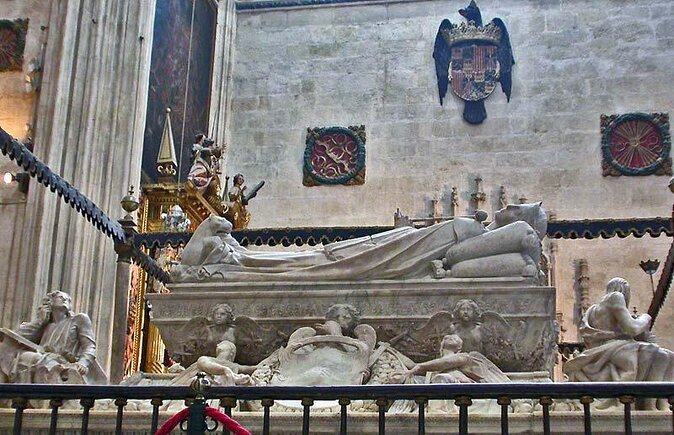
- Royal Chapel tombs: built 1505 to 1517, in the Isabeline Gothic style, beside the Cathedral
- Cathedral on a former mosque site: a Spanish Renaissance-style statement tied to Queen Isabella
- Multiple landmark stops: you also pass the Church of Sagrario and the Madraza Palace area
- Art-historian style guiding: guides are repeatedly praised for clear explanations and context
- Small group size: capped at 20 people for a more manageable pace
- Bring a headset, if you can: recommended, and audio issues have shown up for some guests
Walking from Plaza Isabel la Catolica to Granada Cathedral
Your experience starts in Central Granada at Plaza Isabel la Católica. Plan to arrive a little early, because the day’s flow depends on everyone syncing up before you head into the Cathedral area on foot. The overall tour time is about 1 to 2 hours, though some people report it can stretch closer to around 2.5 hours, depending on how questions and pacing go.
This walk matters more than it sounds. You’re not hopping between far-flung sights. You’re moving through the historic core where styles overlap, and where old Granada energy still shows up in street layout and architecture placement. The stop at the Cathedral is the anchor, but the real payoff is the way the guide frames what you see, not just what you see.
I also like that the tour is offered in English and uses a mobile ticket. That combination tends to reduce friction if you’re trying to travel light and keep plans simple.
More of the Cathedral and Royal Chapel:
- Granada: Cathedral and Royal Chapel Private tour with ticket
★ 4.8 · 498 reviews - Granada: Cathedral, Royal Chapel & 5 Monuments Combo Ticket
★ 4.4 · 454 reviews - Granada: 3-Hour Cathedral and Royal Chapel Tour
★ 4.8 · 405 reviews
Granada Cathedral: Spanish Renaissance style, right on former mosque ground
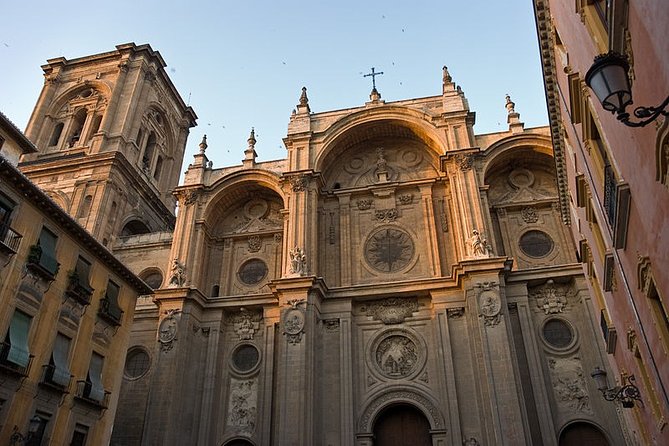
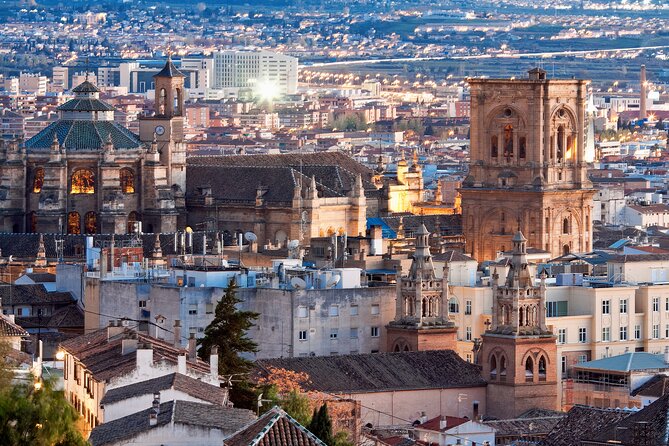
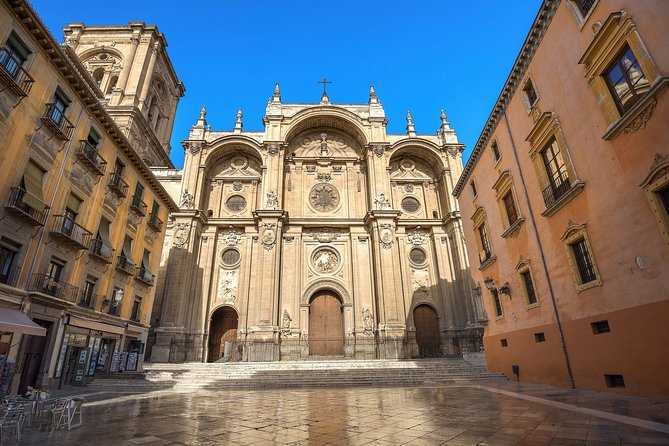
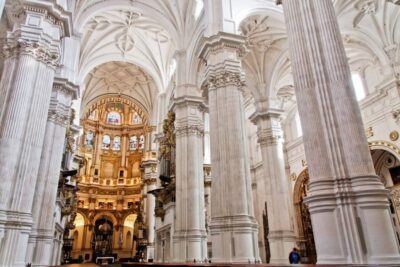
The Cathedral visit is typically about an hour, and admission is included. This is not just a “pretty church” stop. The guide’s storyline centers on the Cathedral being erected on the site of the city’s main mosque, under the influence of Isabella of Castilla, and becoming one of the early Renaissance constructions in Spain.
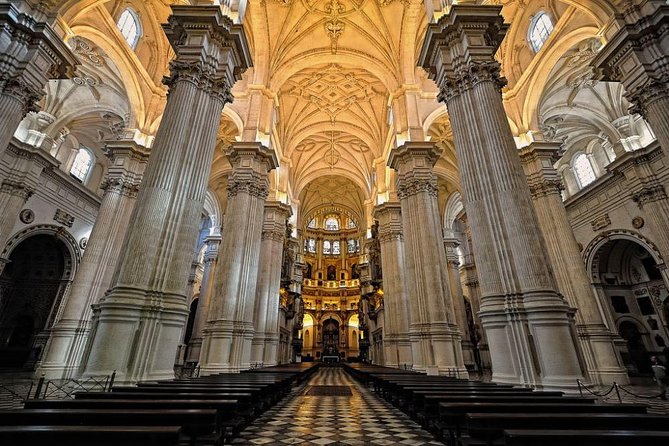
When you stand in front of it, focus on the façade and the transition into the interior. The Cathedral’s Renaissance flavor is often easier to spot once the guide points out how the building shifts away from what you might expect from earlier Iberian styles. Inside, the Cathedral’s details can feel busy at first. That’s normal. With a trained guide, the ornament starts to make sense as visual language, not just decoration.
One thing I genuinely appreciate here is that the tour frames the Cathedral as a statement, not a museum piece. You learn why this site was chosen and what the building represented, so your eyes start traveling to the right elements instead of getting stuck on the biggest surfaces.
Practical tip: if you’re sensitive to long standing in large churches, pace yourself. The Cathedral interior can be cool, but it also demands attention, and you’ll likely keep your head tilted for a while.
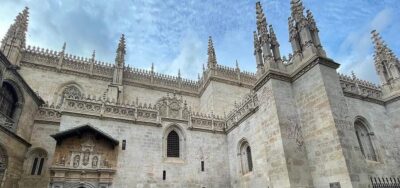
Royal Chapel: Isabeline Gothic tombs of the Catholic Monarchs
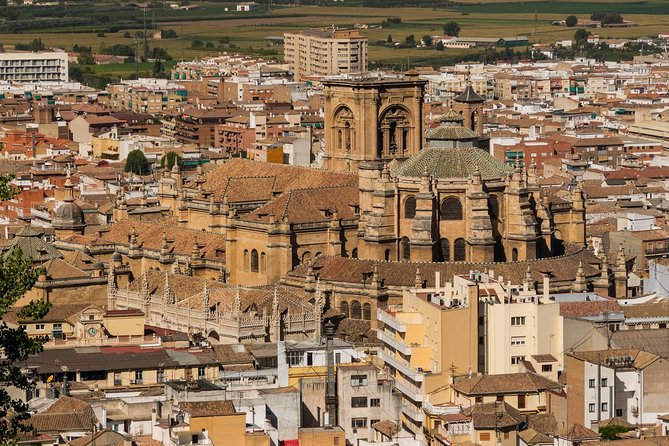
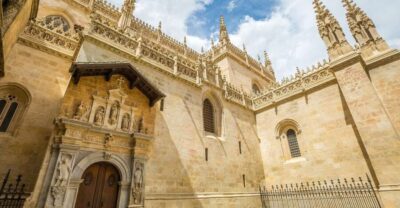
After the Cathedral, you move to the Royal Chapel area. This stop is about 30 minutes and includes admission. The Royal Chapel sits right next to both the Cathedral and the Madraza, the former Coranic school, so it’s a visually powerful place to compare architectural eras side by side.
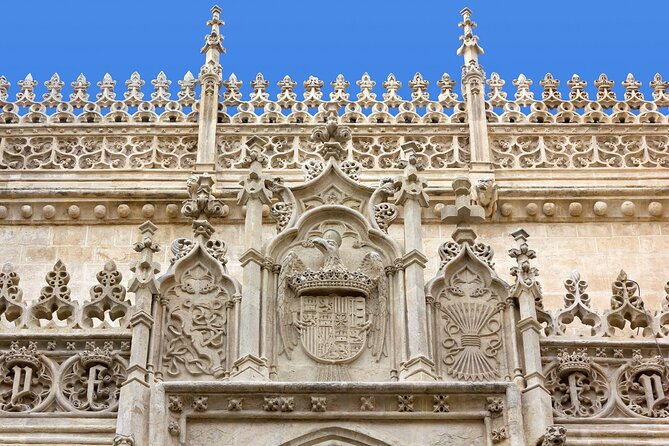
Here’s what makes it special. The Royal Chapel was built between 1505 and 1517 in the Isabeline Gothic style. It’s described as one of the biggest mausoleums in Europe, and it’s strongly tied to Christian symbolism because the Catholic Kings chose this place to rest forever.
That tomb focus is not just a detail. It changes how you experience the space. You’ll be guided toward understanding the chapel’s function, what it means to be a royal resting place, and how the style supports that purpose. Instead of treating the chapel as a standalone church, the guide connects it to the broader Granada power story.
This is also where many people say the tour really clicks. The Royal Chapel often lands harder than the Cathedral for first-timers because you get a more concentrated “why is this here” feeling. You can see how the architecture and the symbolism work together.
If your group likes photos, you’ll likely want to plan a few quick shots without turning it into a photo sprint. The guide’s pacing gives you time to look and then to listen, which is the best combo in places like this.
Church of Sagrario and the Madraza Palace area: the in-between stops that matter
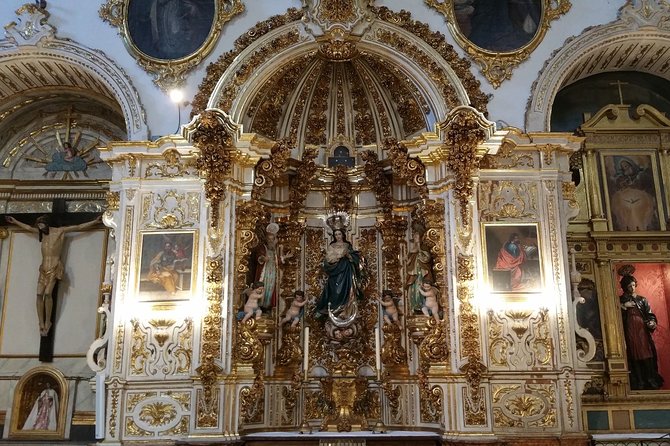
Between the Cathedral and the Royal Chapel, you’ll also encounter the Church of Sagrario and the Madraza Palace. These may sound like “extra stops,” but they do real work in the tour narrative.
The Church of Sagrario helps you keep the religious thread, while still showing the broader cluster of Christian monuments around the Cathedral. The Madraza palace area reinforces the point that Granada did not reset its identity overnight. You’re standing next to layers of history, including the presence of the Madraza as an older Islamic-era school.
The value of these in-between stops is that they prevent your brain from sorting everything into separate boxes. Instead, you start to recognize how Granada’s evolution shows up in proximity. Old and new are often not far from each other in the same streets and structures.
A few more Granada days to weigh up
- Granada: Alhambra & Generalife Fast-Track Guided Tour
★ 4.7 · 8,313 reviews - Granada: Alhambra Entry Ticket with Audio Guide
★ 4.1 · 5,950 reviews - Fast-Track Alhambra & Nasrid Palaces Guided Tour
★ 4.7 · 4,379 reviews - Skip The Line Alhambra and Generalife Guided Tour
★ 4.0 · 3,825 reviews
The guides: art-history storytelling that turns stone into context
A big reason this tour earns a high rating is the human factor: the guide. Multiple named guides show up in the feedback, including Mercedes, Estefana, Sara, Alfredo, Laura, Jamie, Marta, Alexandra, and Christopher. Across these names, the common thread is how they translate architecture into readable ideas.
That usually sounds like “they explained things well.” But what you want to know as a reader is how that translates into your actual experience. A good guide will point out details that you’d easily miss on your own. They’ll also connect political context to visual cues, so you’re not just admiring, you’re understanding.
One helpful detail from feedback: some guides reportedly prioritize giving a good experience over strict rushing, even if that means running a bit longer. That’s a plus if you like time to ask questions, not just hear a script.
The flip side is audio and clarity. One participant had trouble with the audio system losing signal and no backup microphone. Another noted that a guide could be hard to understand at times. If you’re booking this, treat it as a “bring your tools” situation.
My practical advice: wear a headset if you have one. The tour recommends having your own, and it can save you if the provided audio gets glitchy.
Timing, pacing, and what to do with your day
This tour is designed to fit into an afternoon plan. You’ll meet at Plaza Isabel la Católica and move on foot to the Cathedral and Royal Chapel area. The typical duration is 1 to 2 hours, with occasional longer days reported.
So what does that mean for your itinerary? It means you should schedule a few hours around it if you’re also visiting other major sites nearby. The area is central, walkable, and historically dense. If you cram this as the last stop of a tight schedule, any delay gets stressful.
It also helps to know the group size. The experience caps at 20 travelers. That’s large enough to be lively, but small enough that a guide can still manage the flow and keep an eye on people.
If you’re doing this on a day when you also plan a major timed site, build in buffer time. You’re walking and moving between interiors, which can take more time than expected when you’re paying attention to the guide.
Cost and value: what you’re really paying for at about $43
At $43.45 per person, the price can feel either like a bargain or like a stretch, depending on what you compare it to. Here’s the value logic I’d use before you book.
You’re paying for:
- A professional art historian guide
- Admission tickets to both the Royal Chapel and the Granada Cathedral
- A structured route that covers more than one monument, without you needing to build the plan yourself
If you were doing this solo, you’d still need to pay for entry tickets and then spend time figuring out what to focus on inside. The tour’s job is to save you that mental labor. Even if you’re a confident self-guided traveler, the Cathedral and Royal Chapel are the kind of places where the “what am I looking at and why does it matter” part can make the experience much better.
So I’d call it good value if you want interpretation, not just access. If you prefer wandering without a narrative, you might find the price harder to justify.
Who this tour suits best
This experience is ideal if you want Granada from a different angle than the Alhambra. It’s also a strong choice if you like architecture, Christian art, and how politics shape buildings.
It’s a good fit for:
- First-timers who want a structured overview of Granada’s major Christian monuments
- Travelers who enjoy learning what symbols mean, not only what things look like
- People who like small-group tours, capped at 20
- Anyone who appreciates the overlap of cultures through built space, Cathedral next to older Madraza structures
It might not be ideal if you:
- Want a mostly quiet, self-paced walk
- Are extremely sensitive to audio issues, unless you plan to bring your own headset
- Need the simplest possible schedule with zero walking and zero interior stops
Booking tips to avoid common annoyances
A few small steps can make this smoother.
1) Bring or use your own headset
The tour recommends it, and one participant reported the audio system losing signal with no backup microphone.
2) Keep a flexible window
The stated duration is about 1 to 2 hours, but longer sessions happen.
3) Double-check your info if you’re combining with Alhambra
One note included says that Alhambra requires each passenger’s full name, date of birth, and passport details when booking. If you’re also planning Alhambra, have that information ready.
4) Plan how you’ll get to the meeting point
The start is at Plaza Isabel la Católica in the city center. One person flagged that a taxi might not work from a cruise port location, so make your transport plan early if you’re arriving by ship.
Should you book this Royal Chapel and Cathedral guided tour?
Yes, you should book it if you want Granada’s center of power explained in plain language, with a guided focus on architecture, symbolism, and the story of the site itself. The Cathedral and Royal Chapel are impressive on their own, but the guide is what helps it click, especially with art-historian level commentary and clear context from guides like Mercedes, Estefana, Laura, Jamie, Marta, Sara, Alfredo, Alexandra, and Christopher.
Skip it only if you know you’ll hate guided listening, you’re likely to get frustrated by audio glitches, or you’re trying to fit it into a super tight schedule with zero buffer. If you can handle a bit of walking and you like learning while you look, this is a very solid, value-friendly way to see Granada’s Christian monuments up close.
Latest to land in Granada
- Granada: Authentic and intimate Flamenco Show with Snacks★ 4.2 · 9 reviews
- Guided tour Granada Unexplained★ 5.0 · 5 reviews
- From Granada: Day Trip to Trevélez with Ham Factory★ 4.6 · 12 reviews
- Albaicín and Sacromonte Sunset tour + Flamenco show★ 5.0 · 11 reviews
- Guided tour Conspiracy in the Albaicín★ 5.0 · 6 reviews
- Water paths. Private adventure and history tour★ 5.0 · 6 reviews
- Albaicin guided tour with dogs★ 5.0 · 6 reviews
- Vía Ferrata in Granada – Moclín★ 5.0 · 4 reviews
Granada Cathedral & Royal Chapel, side by side.
Cathedral and Royal Chapel Private tour with ticket
Read our review →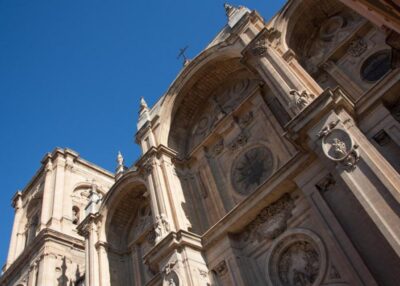
Cathedral, Royal Chapel & 5 Monuments Combo Ticket
Read our review →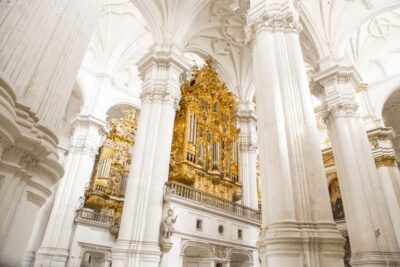

Cathedral and Royal Chapel Guided Tour with Tickets
Read our review →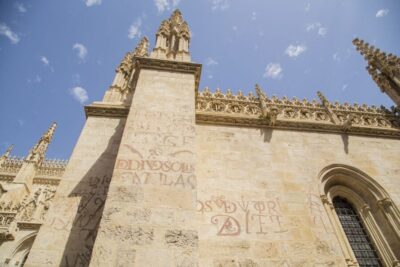
This tour also appears in