Reviewed · TOURS
Jewish Tour in Granada
This Jewish tour in Granada is interesting because it uses a short walk to connect key public places with the people and pressures that shaped Jewish life in the city. I especially love how the guide, including Marilyn in at least one set of tours I’ve seen firsthand, turns statues and street corners into real stories.
I also like the built-in pacing. You get quick stops tied to figures like Yehuda ibn Tibon, then you end with the Mirador de San Nicolás payoff, where the Alhambra views help you put the whole story into place. One drawback to consider: there are very few physical remains to inspect, so you’ll get the value mainly through interpretation, not ruins you can touch.
Key highlights
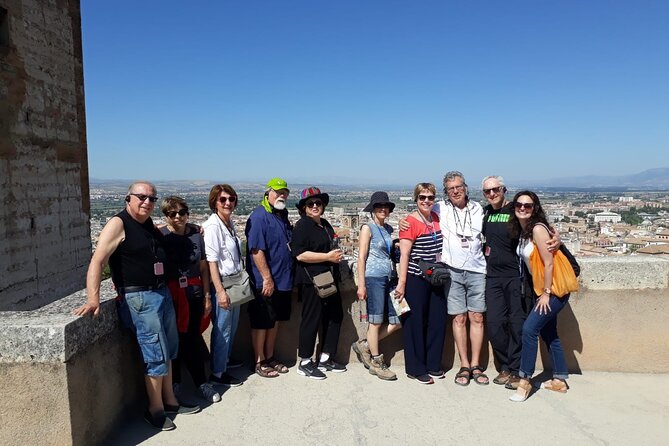
- Private group size up to 5 means the pace stays comfortable and questions stay on-topic
- English-speaking guide makes the explanations easy to follow without slowing the walk
- Plaza de Isabel La Catolica frames the story around a major turning point in Iberian history
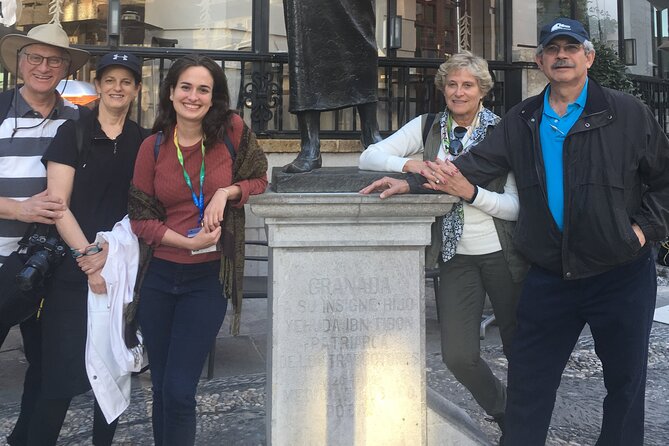
- Yehuda ibn Tibon statue spotlights a Jewish physician and translator known for work across Jewish Arabic and Hebrew
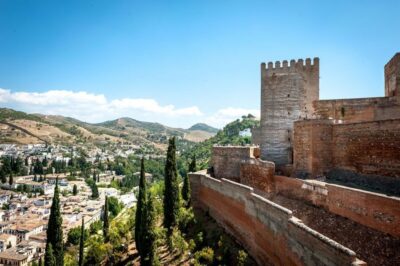
- Torres Bermejas points you toward the fortification logic behind neighborhood protection
- Mirador de San Nicolás gives you a classic Granada view, with context that makes it land harder
Why this tour works when there are few physical remains
In Granada, the Jewish story isn’t waiting in a single museum room. Instead, it’s scattered across monuments, names, and the way neighborhoods were defended and re-shaped over time. That’s exactly why this tour feels smart. You aren’t chasing objects. You’re learning how to read the city.
I like that the experience leans on explanation you can carry with you after the walk. The guide’s job is to connect dots you would miss on your own, like why a statue matters or what a fortress location implies. In one guided experience, the guide was praised for bringing history to life even when there simply isn’t much left to view materially.
There’s also a practical side to this style. A 2.5-hour walk is enough to get oriented, without turning your day into a full-day research project. You finish with an emotional sense of place, then you can keep exploring the Alhambra area on your schedule.
More of Granada worth keeping open:
- Granada: Alhambra & Nasrid Palaces Tour with Tickets
★ 4.7 · 19,801 reviews - Granada: Alhambra & Generalife Fast-Track Guided Tour
★ 4.7 · 8,313 reviews - Granada: Alhambra & Gardens Tour w/Nasrid Palaces Option
★ 4.5 · 6,437 reviews
Getting there from Plaza Nueva, and how the timing really feels
The tour starts and ends at Plaza Nueva (Pl. Nueva, 18010 Granada). That’s a great location for two reasons. First, it helps you avoid dead time crisscrossing the city. Second, it puts you near public transit, so it’s easier to stitch this into a normal Granada day.
The tour runs about 2 hours 30 minutes. The route is designed as several short stops, so you don’t spend the whole time trudging between viewpoints. In practice, that matters because Granada can have uneven sidewalks and some uphill stretches. The tour expects moderate physical fitness, which is normal for a city walking experience.
You’ll also want to think about energy level. Even when each stop is only around 10 to 15 minutes, your feet still do the work. If you know you’ll tire quickly, plan for comfortable shoes and water, especially in warmer months.
And yes, this one is private. Only your group participates, up to 5 people. That means you can ask follow-up questions without feeling rushed, which is a big deal when the core of the experience is interpretation.
Pickup options and what to do if you want to save uphill effort
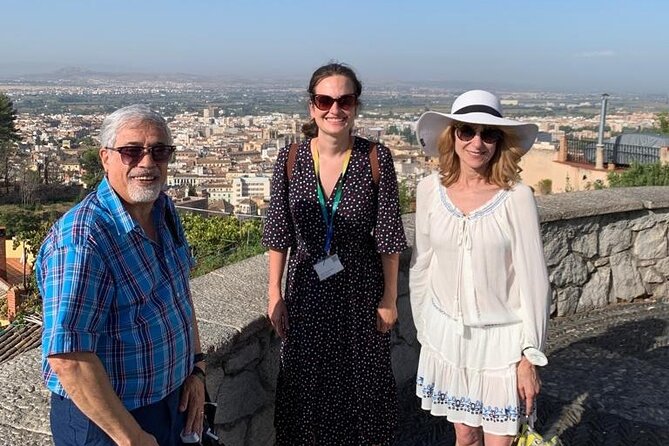
Pickup is offered, with personalized pickup and transfers available. If your group wants to minimize logistics, this can be a real time-saver. You’re not stuck trying to figure out the best spot to meet once you’re already in Granada traffic and crowd flow.
One review praised the guide for using a taxi to start from a higher vantage point rather than making the group walk up. That’s not something I’d treat as guaranteed for every departure, but it does tell you what kind of problem-solving the guide is comfortable with. If your group is short on time or you’d rather conserve energy for the viewpoints, ask about starting with a quick ride.
A mobile ticket is included, so you’re not hunting down paper confirmation in your hotel room. That makes the day smoother, especially if you’re moving straight from breakfast to the walk.
Plaza de Isabel La Catolica: history tied to a global crossroads
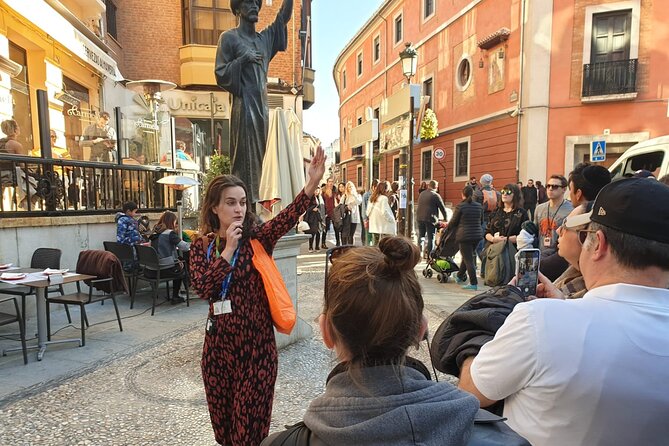
The first stop is Plaza de Isabel La Catolica, by the statue of Queen Isabel and Christopher Columbus. This is a strong opener because it frames the story around a turning point. You’re not just learning local facts. You’re looking at how events in Granada rippled outward into wider world history.
The stop itself is short, around 10 minutes, and the ticketed part is listed as free. That keeps you from feeling stuck waiting around in a plaza when you could be moving. Still, this opening works best when you let it set the theme: power, change, and what happens when rulers redraw the rules.
Here’s the way I’d use this moment. Before you move on, quickly ask yourself what you expect to find in Granada. If you picture one clean chapter of Jewish life, you’ll be surprised. The city’s story is layered, and this plaza is a reminder that major political shifts can reshape communities, public memory, and what survives in stone.
Same city, a completely different kind of day:
- Granada: Alhambra Entry Ticket with Audio Guide
★ 4.1 · 5,950 reviews - Fast-Track Alhambra & Nasrid Palaces Guided Tour
★ 4.7 · 4,379 reviews - Skip The Line Alhambra and Generalife Guided Tour
★ 4.0 · 3,825 reviews - Granada: Alhambra Ticket and Guided Tour with Nasrid Palaces
★ 4.7 · 3,496 reviews
Yehuda ibn Tibon statue: a quick stop with big intellectual weight
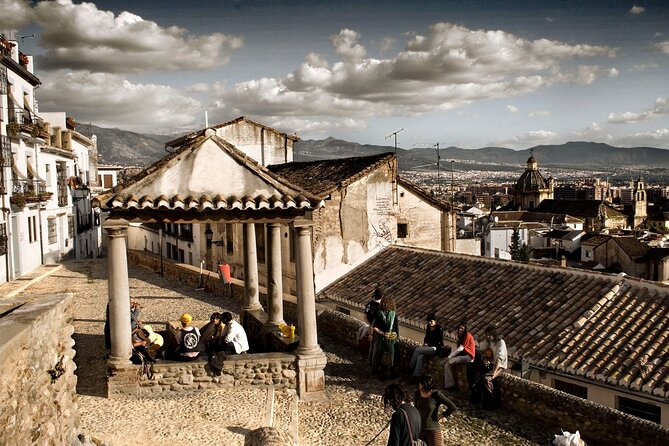
Next is the Estatua de Yehuda Ibn Tibon. The name alone is a clue that you’re about to learn about someone who carried ideas across languages. Yehuda ibn Tibon is presented as a prominent Jewish physician and translator, known for translating Jewish Arabic-language works into Hebrew.
This stop lasts about 10 minutes, but it’s one of the most meaningful because it shows how intellectual life traveled, not just people. When a guide talks about translation, you start thinking about access. Who could read what, who could learn from whom, and how texts moved between communities.
If you like history that connects culture to everyday life, this is a highlight. It also keeps the tour from becoming only political. Instead, you get a human scale: one person’s work helps shape what later readers could understand and preserve.
The statue is free to visit, and the time spent here is short enough that it doesn’t drag. Still, take a few minutes to pause and let the explanation land. This is the kind of stop that rewards listening.
Torres Bermejas: why fortifications mattered to Jewish neighborhoods
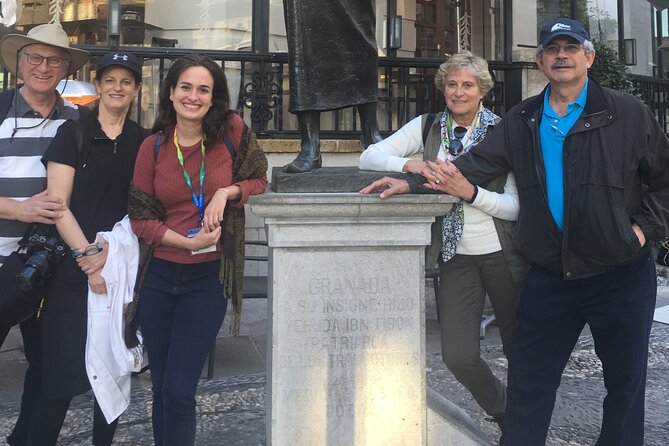
Then you reach Torres Bermejas, described as the fortress that protected the Jewish quarter. This is the defensive side of the story, and it’s where the city stops being abstract.
The main value here is location logic. Even if you do not have a long lecture, you can use the fortress idea to understand the pressures around the neighborhood. What does it mean for a community to be protected by walls and towers? What does it imply about safety, boundaries, and control?
This stop is also about 10 minutes, listed as free. I’d treat it like a visual prompt. Look at how the fortification sits in the area, and connect it to what a protected quarter would mean day to day. It’s a “read the city” moment.
One practical note: the area around historic sites can have uneven ground. Go slow on your feet. This is a short stop, but you still want clean footing so you can enjoy it rather than watch the sidewalk.
Mirador de San Nicolás: the Alhambra view with context
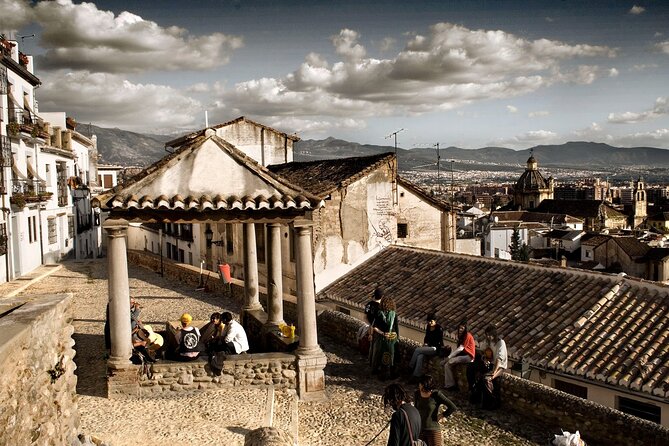
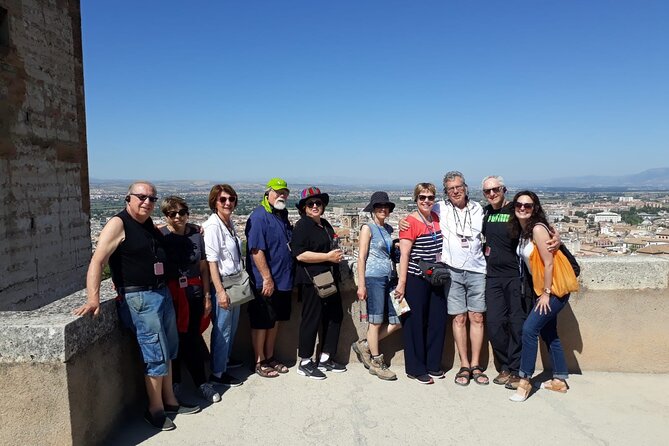
After the fortification stop, the tour moves to Mirador de San Nicolás for around 15 minutes. The big draw is the view of the Alhambra, and that part is instant gratification. But what makes it better on this specific tour is that the viewpoint isn’t only about scenery.
I like using a viewpoint to lock in what I just learned. When you see the Alhambra from above, the city looks different. You start thinking about visibility, geography, and why certain places mattered. The guide’s explanation helps you connect architecture and power without turning it into a lecture-only experience.
If you’re energy-conscious, this is the part where pickup or a taxi can make a difference. Since at least one guide has used a taxi to start from a higher point, it suggests that the group is encouraged to prioritize time and comfort when possible. Even if you don’t arrange anything, plan to take your time here. The view is worth standing still for a bit.
Also, keep your phone ready for pictures. This is the best “I get it now” frame for sharing with friends later.
Plaza Larga: ending on Granada’s older pulse
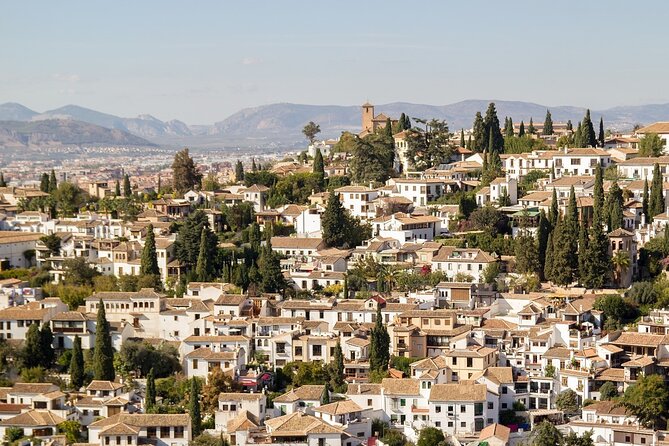
The final stop is Plaza Larga, described as one of the oldest plazas in Granada, again around 10 minutes and free. This ending helps you return from dramatic views to street-level reality.
Old plazas tend to function like social stages. Even without a big museum stop, you can get a feel for how people moved through the city, met, and formed daily routines. When the tour ends here, you’re left with a mental map of key public points rather than one isolated scene.
I find that finishing on a plaza works because it lets you keep exploring immediately. You aren’t forced into a last-minute sprint to catch transit or rush toward your next booking. Instead, you can decide where you want to go next based on what you just learned.
Price and value for a private tour up to 5
The price is $383.44 per group (up to 5), for about 2 hours 30 minutes. That pricing can be a steal or it can be just okay, depending on group size.
If you book with a full group of 5, you’re effectively around $76.69 per person. If you book as 2 people, it becomes about $191.72 per person. That’s the key value question you should ask before you book: will you share the cost with enough people to make it feel worth it?
For me, the private format is the justification. You’re getting a guided explanation in English, with stop-by-stop pacing built into the route. Plus, your group stays together the whole time, so you’re not playing catch-up with a larger crowd.
Add in the option of pickup and transfers, and the value can rise quickly if you’re trying to save walking energy or time. Even if you don’t use pickup, the fact that it’s available is a helpful safety net.
The fact that this tour is often booked about 30 days in advance also suggests demand. If you’re traveling in a busy season, booking earlier can help you lock in a preferred time.
Who this Jewish Granada tour suits best
This experience fits best if you want context. If you like your travel with explanations attached, you’ll enjoy this route. You’re not just visiting named spots. You’re learning what those names and locations imply.
It’s also a good match for couples and small friend groups who want privacy. The up-to-5 group size keeps the experience flexible, and it’s easier to ask questions about translation, medicine, fortifications, or how a major historical turning point influenced public memory.
If you’re someone who wants lots of physical remains, you might feel the tour is more interpretive than hands-on. The experience is built for people who can enjoy history even when the evidence is mostly intellectual, memorial, and architectural.
Finally, it suits anyone who is okay with moderate walking. The route is short per stop, but it still adds up. Wear comfortable shoes and keep your pace relaxed.
Should you book this Jewish tour in Granada?
Book it if you want a guided, private way to understand Jewish-related figures and spaces in Granada, using monuments like Yehuda ibn Tibon and Torres Bermejas plus a finish at Mirador de San Nicolás. The best part is that the guide’s storytelling helps you make sense of places where physical traces are limited, so you leave with more than photos.
Skip it or swap it for something else if your main goal is to see extensive preserved artifacts or a heavily material-focused museum-style experience. This is a walking tour of meaning, not a building-by-building archaeology day.
FAQ
How long is the Jewish tour in Granada?
It lasts about 2 hours 30 minutes.
Where does the tour start and end?
It starts and ends at Plaza Nueva (Pl. Nueva, 18010 Granada, Spain).
Do you offer pickup?
Yes. Personalized pickup and transfers are available.
Is the tour available in English?
Yes. The tour is offered in English.
How much does the tour cost?
The price is $383.44 per group, up to 5 people.
Is this a private tour?
Yes. Only your group will participate.
What kind of ticket do I get?
You receive a mobile ticket.
What’s the cancellation policy?
You can cancel for free up to 24 hours before the experience’s start time for a full refund.
Is the tour suitable for people with mobility concerns?
The tour notes that travelers should have a moderate physical fitness level.
Latest to land in Granada
- Granada: Authentic and intimate Flamenco Show with Snacks★ 4.2 · 9 reviews
- Guided tour Granada Unexplained★ 5.0 · 5 reviews
- From Granada: Day Trip to Trevélez with Ham Factory★ 4.6 · 12 reviews
- Albaicín and Sacromonte Sunset tour + Flamenco show★ 5.0 · 11 reviews
- Guided tour Conspiracy in the Albaicín★ 5.0 · 6 reviews
- Water paths. Private adventure and history tour★ 5.0 · 6 reviews
- Albaicin guided tour with dogs★ 5.0 · 6 reviews
- Vía Ferrata in Granada – Moclín★ 5.0 · 4 reviews
Tours, side by side.
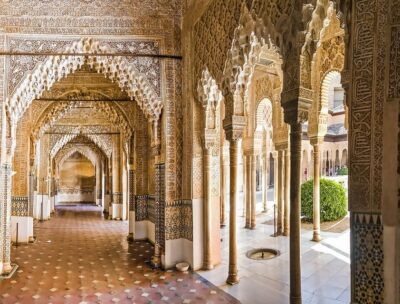
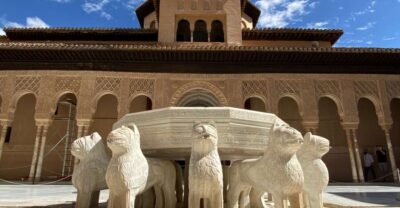

Alhambra & Gardens Tour w/Nasrid Palaces Option
Read our review →
Fast-Track Alhambra & Nasrid Palaces Guided Tour
Read our review →
Skip The Line Alhambra and Generalife Guided Tour
Read our review →
Alhambra Ticket and Guided Tour with Nasrid Palaces
Read our review →
Albaicín and Sacromonte Guided Sunset Walking Tour
Read our review →